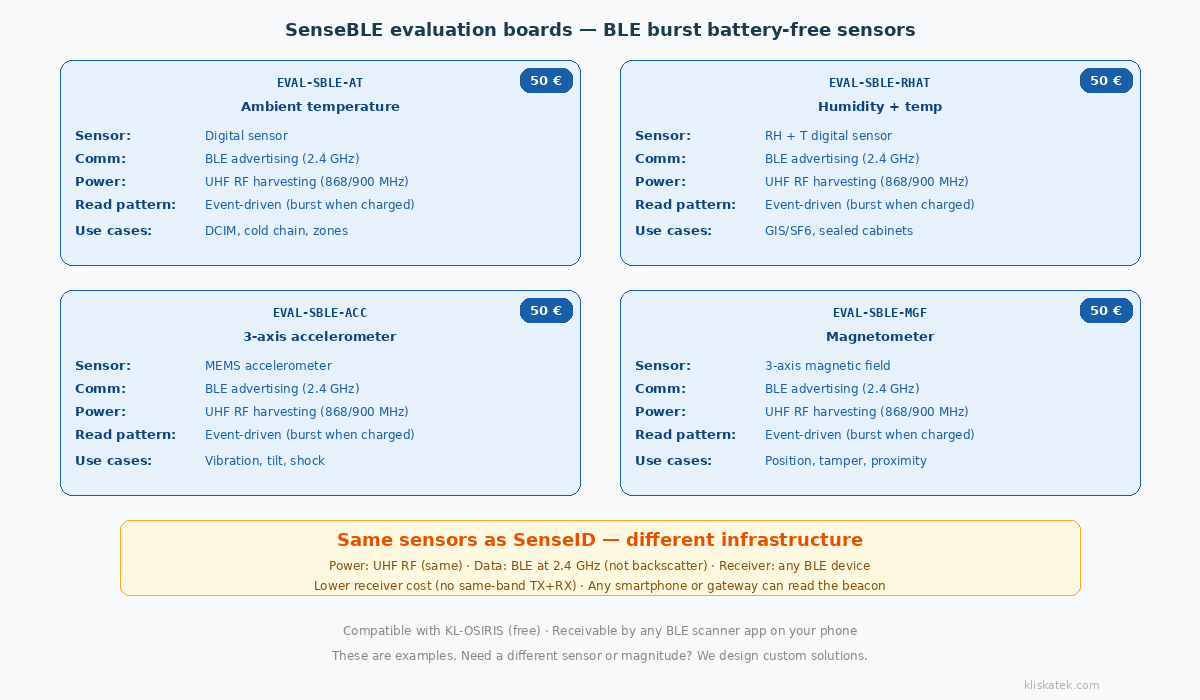
Complete guide to the SenseBLE evaluation boards. Four battery-free sensor tags that communicate via BLE advertising bursts — same sensors as SenseID, lower infrastructure cost. All at 50 € and readable by any BLE device.

 Mikel Choperena
Complete guide to the SenseBLE evaluation boards. Four battery-free sensor tags that communicate via BLE advertising bursts — same sensors as SenseID, lower infrastructure cost. All at 50 € and readable by any BLE device.
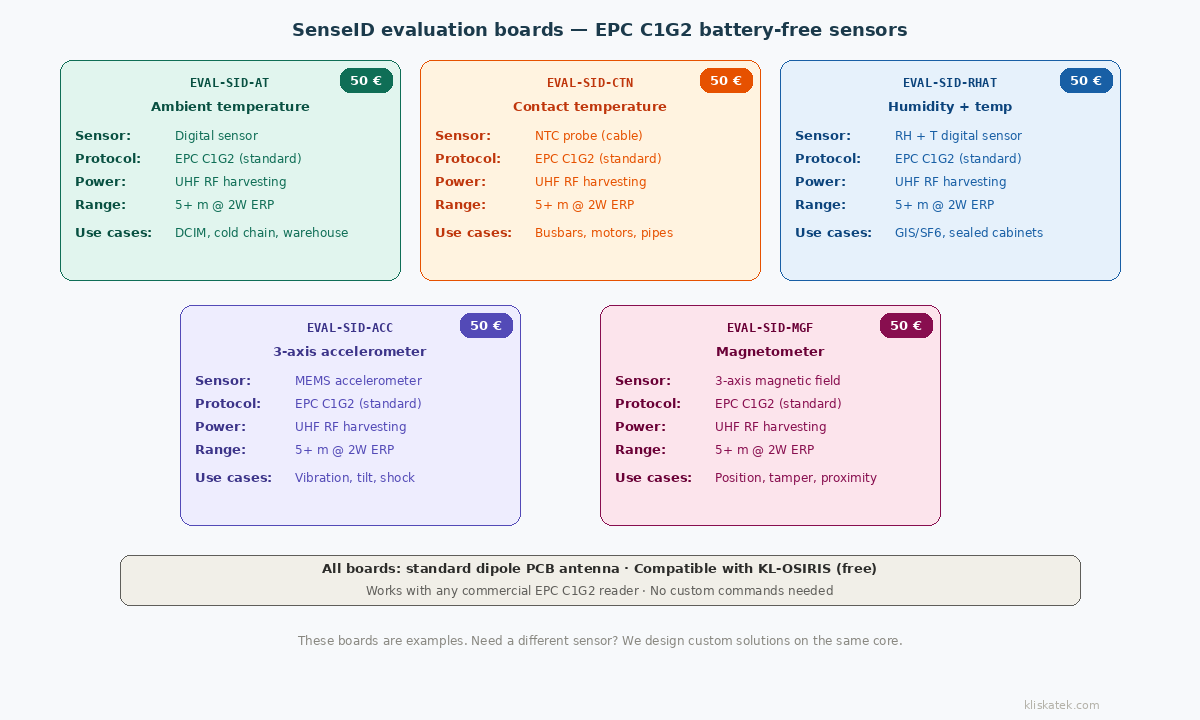
Complete guide to the SenseID evaluation board family. Five battery-free sensor tags using EPC C1G2 — temperature, humidity, accelerometer, magnetometer and contact temperature — all at 50 € and compatible with commercial RFID readers.
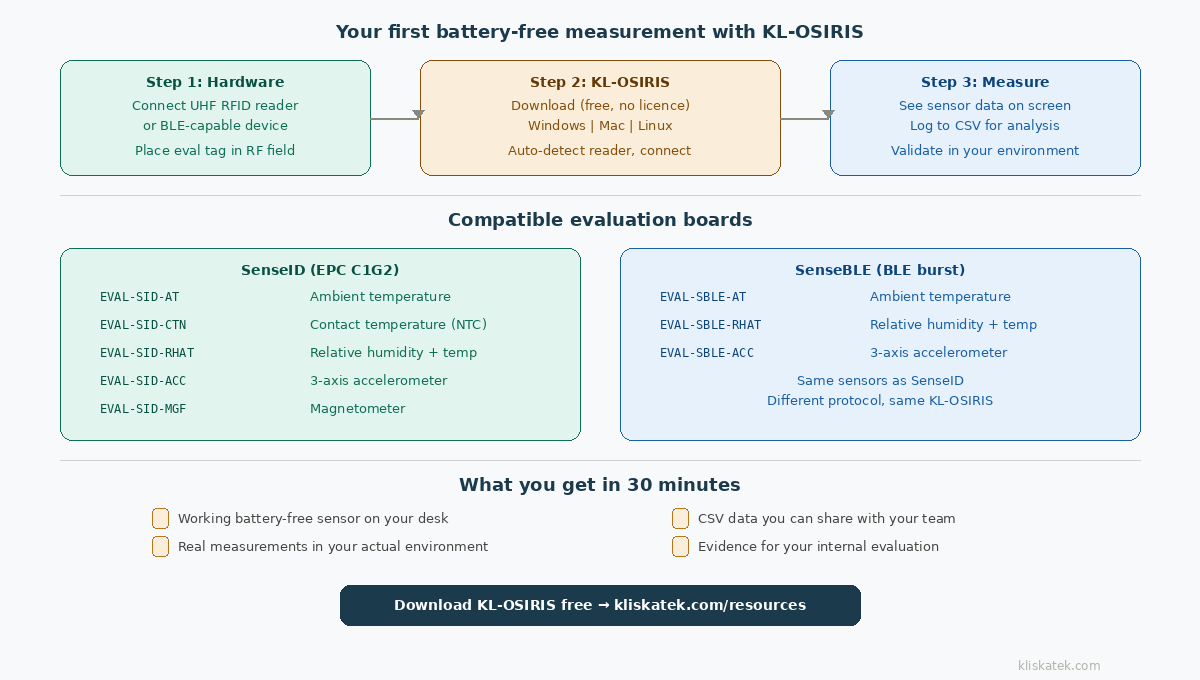
Step-by-step guide to taking your first battery-free sensor measurement with KL-OSIRIS, Kliskatek’s free evaluation software. Connect a reader, place a tag, see live data in under 30 minutes.
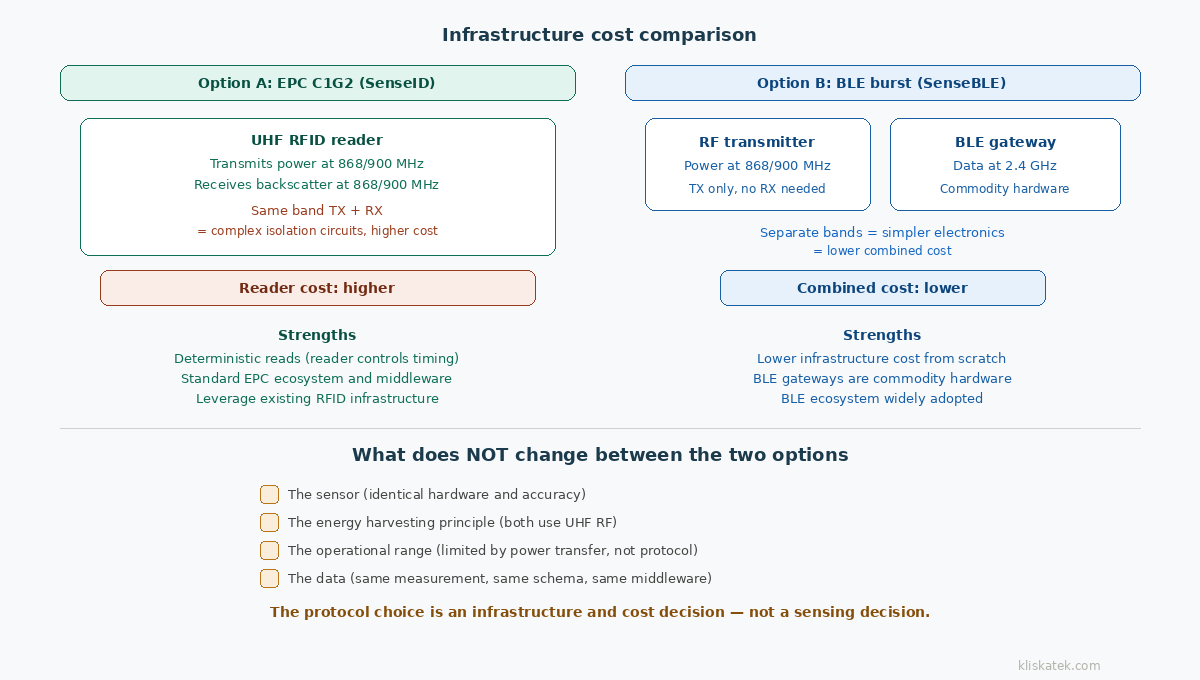
Why UHF RFID readers cost more than RF transmitters plus BLE gateways, when each option makes economic sense, and how to think about total cost of ownership for battery-free sensor deployments.
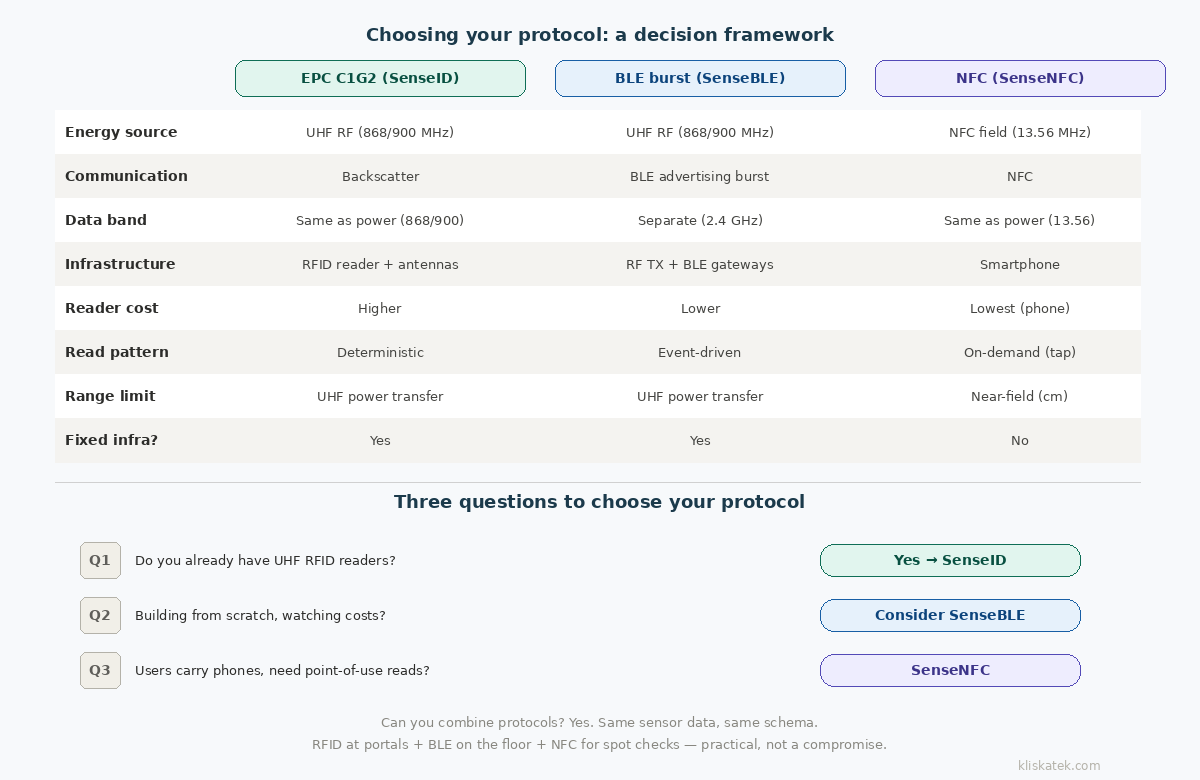
How to choose between EPC C1G2, BLE and NFC for battery-free sensor deployments. A practical framework based on infrastructure, cost structure and use case — not technology hype.
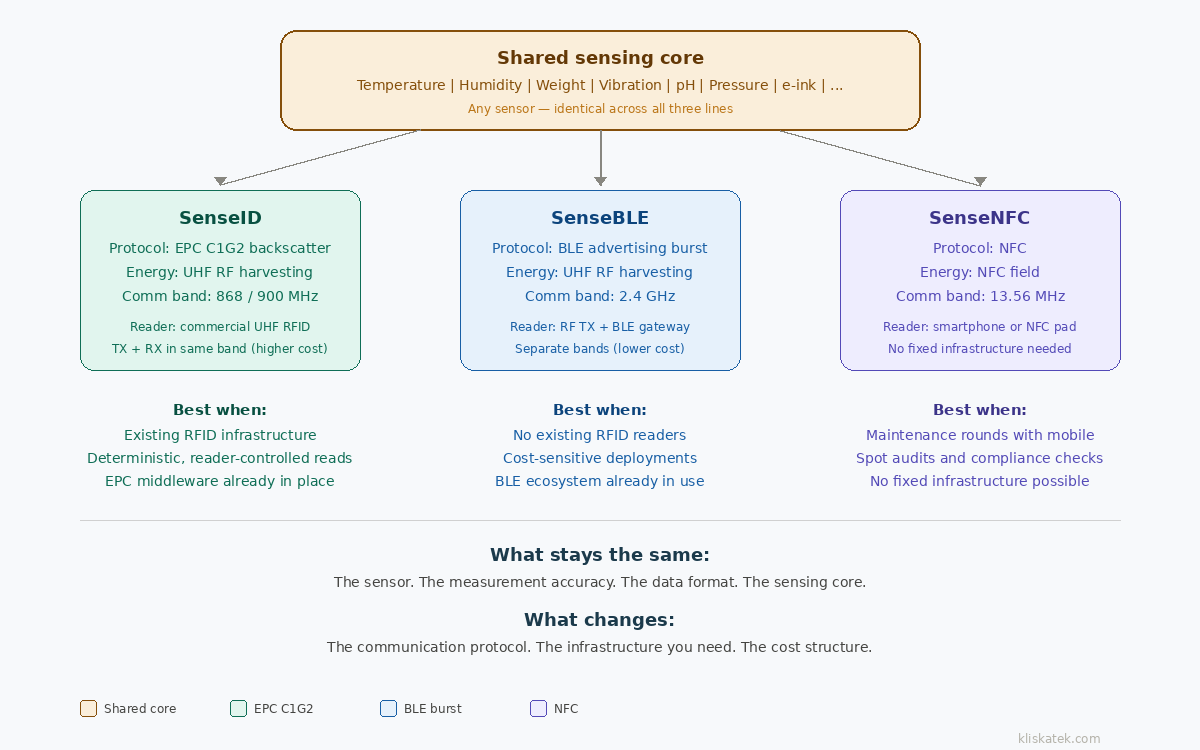
SenseID, SenseBLE and SenseNFC use the same battery-free sensors. The difference is the communication protocol and the infrastructure you need. Here’s how to choose.
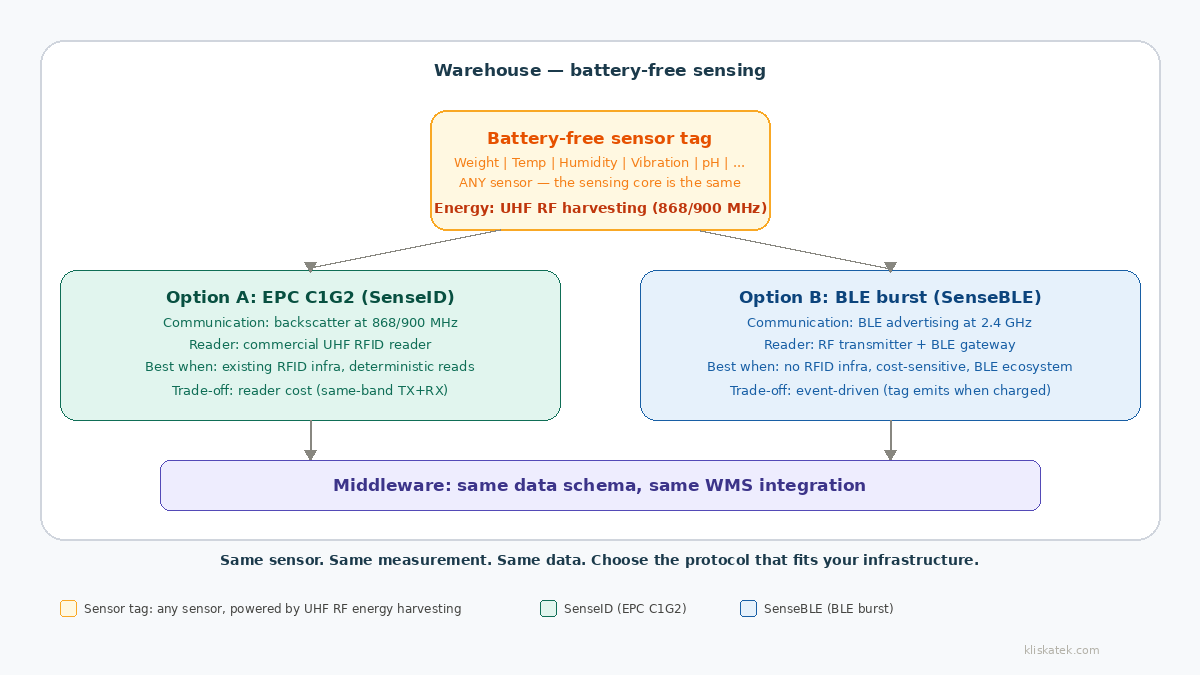
Battery‑free sensors for warehouse weight, ID and environmental monitoring. Choose EPC C1G2 (SenseID) or BLE (SenseBLE) based on your infrastructure — the sensors are the same.
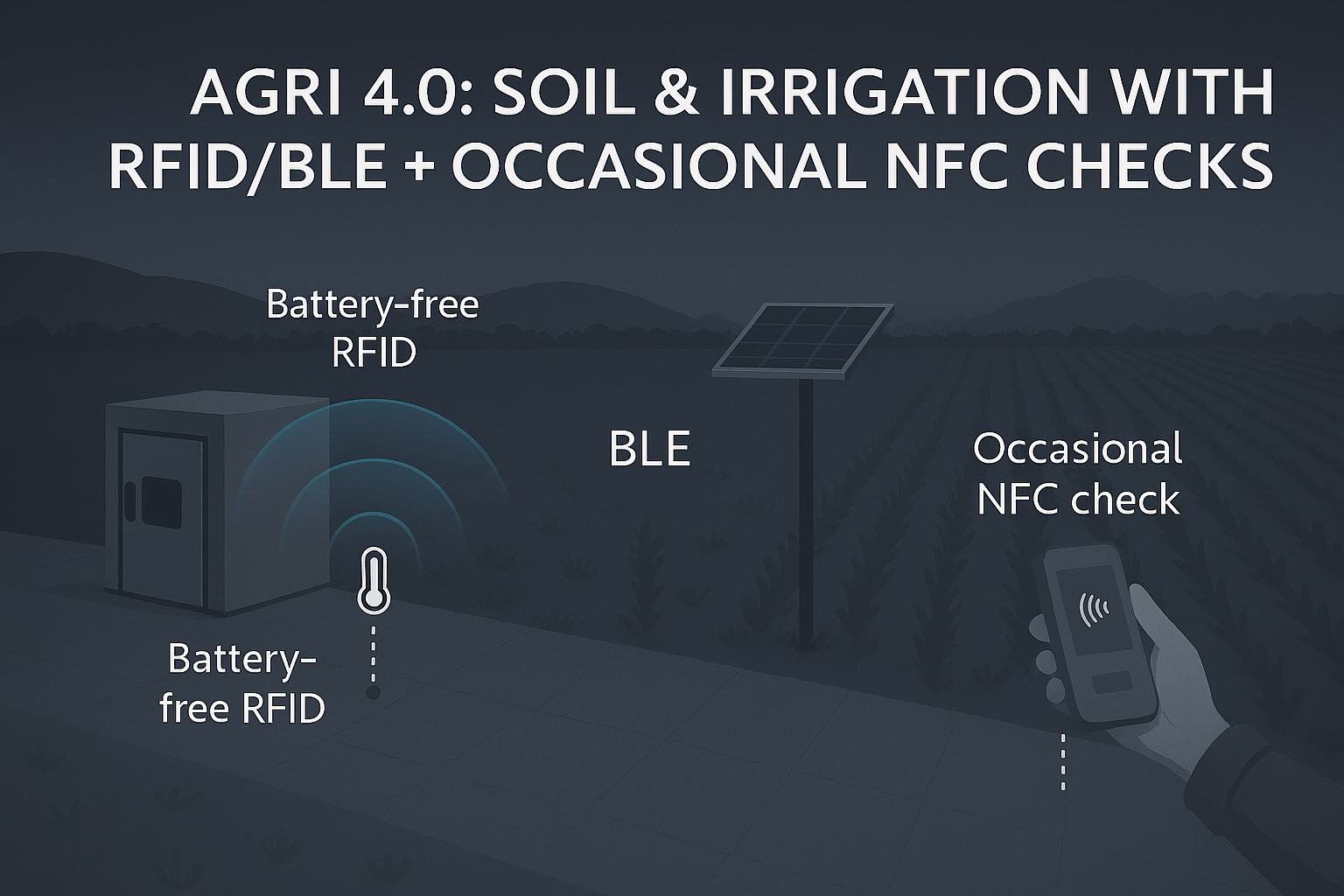
Hybrid Agri 4.0 playbook: battery‑free RFID at touchpoints, BLE for row‑level trends, and NFC spot checks—with cells, message contracts, and acceptance tests.
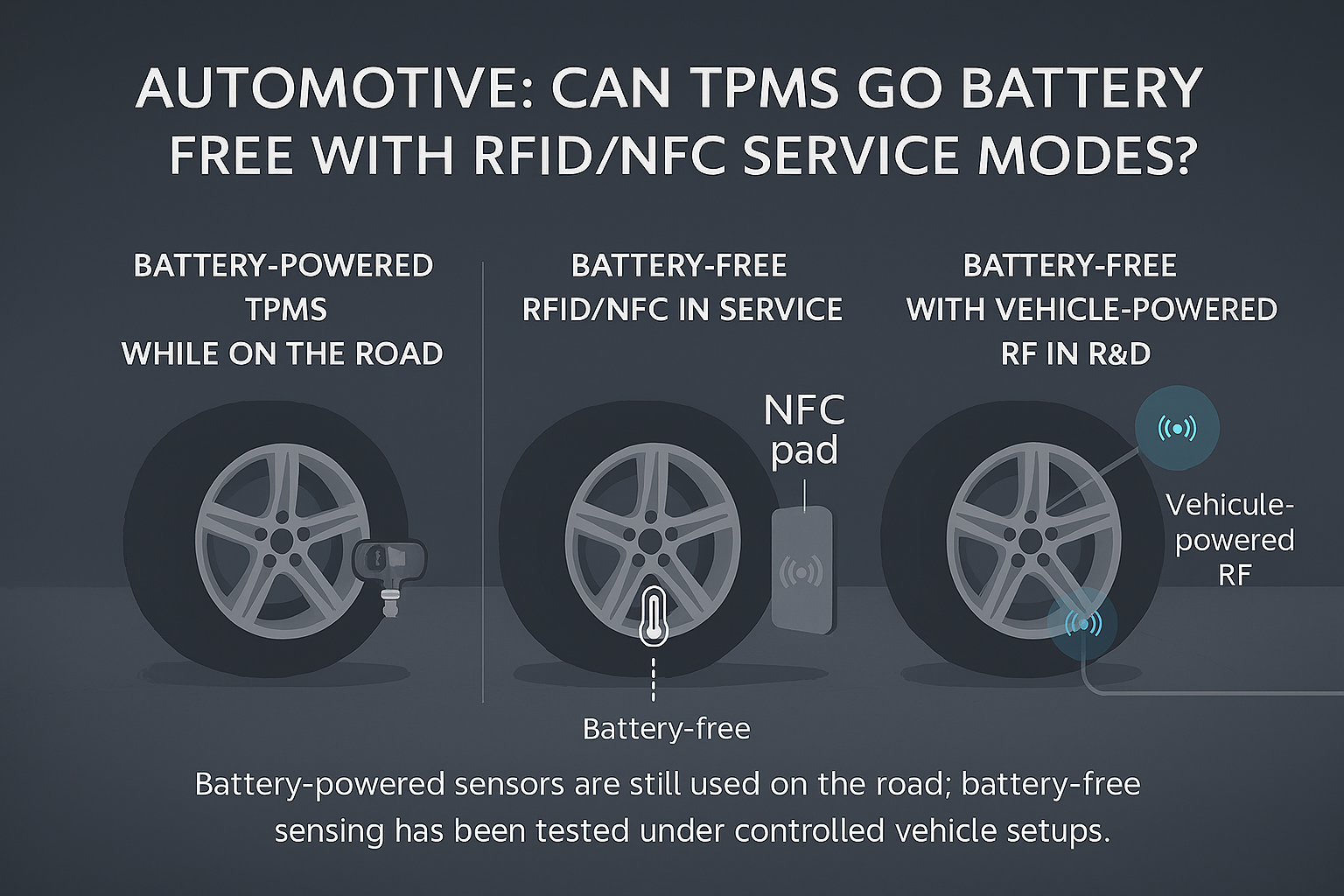
Battery‑free works for tire ID and service‑time sensing; in‑motion TPMS stays powered. We also outline RF‑powered, battery‑free feasibility and what it takes.
Questions about our products or a specific application? We typically respond within 24 hours.
Based at the Donostia-San Sebastián Technology Park. Visitors welcome by appointment.
Paseo Mikeletegi 56
20009 Donostia-San Sebastián
Spain
Kliskatek designs and manufactures wireless, battery-free sensors for industrial applications. Founded by the team behind Farsens — 17 years of experience in RF-powered sensing — we help equipment manufacturers integrate maintenance-free monitoring into their products.
© Copyright 2023-2026 Kliskatek S.L. All rights reserved.